Agentic Orchestration DECIDES
PlanPlanner
ComposeSpecialist AgentsAgents
PerformLoops ↻
VerifyIndependent CheckersCheckers
Degree of AutonomyAutonomy
Suggest · Draft · Act at Gates · Run

We help companies use AI for decisions they make every week.
Build on experience. AI simulates options. A person approves a recommended direction. Growth and process examples show it applied. An illustrative outcome improves from a baseline index of 100 to 118, and that evidence returns to the whiteboard to inform the next decision. Figures are illustrative.
Most AI in the enterprise today is used to find information and automate tasks. We build AI systems for decisions that actually move the business. These systems understand your domain, work on your data and check their own outputs. And they run in your cloud, where your team owns them and keeps making them better.
What It Takes
We design every system around them.
Contextual
It understands your businessGrounded
It works from your organizationReliable
It holds up on short and long tasksAccurate
Every number can be defendedLearning
It improves with useOwnership
You own and operate itOutcomes
The System
AI plans the work. Tested code calculates. Your team stays in control. Every run builds on what the system learns.
Suggest · Draft · Act at Gates · Run
Coding Agents – AI SDLCCoding Agents · AI SDLC
Deterministic · Tested · Governed
Business Taxonomy · Domain Verification
Foundational Code Base
Designed for Agentic Execution
Use → Feedback → Memory → Next Version
Plans the work and runs specialist agents in parallel, checking each result independently and routing anything that fails back for a fix.
Carries work from start to finish. Runs survive interruption and wait for the right person to approve.
Tested code does every calculation. The same inputs always give the same answer.
The domain written down: the terms, the hierarchies, the checks, the approach, and the trade-offs a good answer has to respect.
The memory of how work actually gets done. What was used, what was approved and what was learned sets up the next run.
What we build
Solutions
The decisions that impact business need to be based on your data and context, and should have a view of what happened last time. And these decisions repeat.
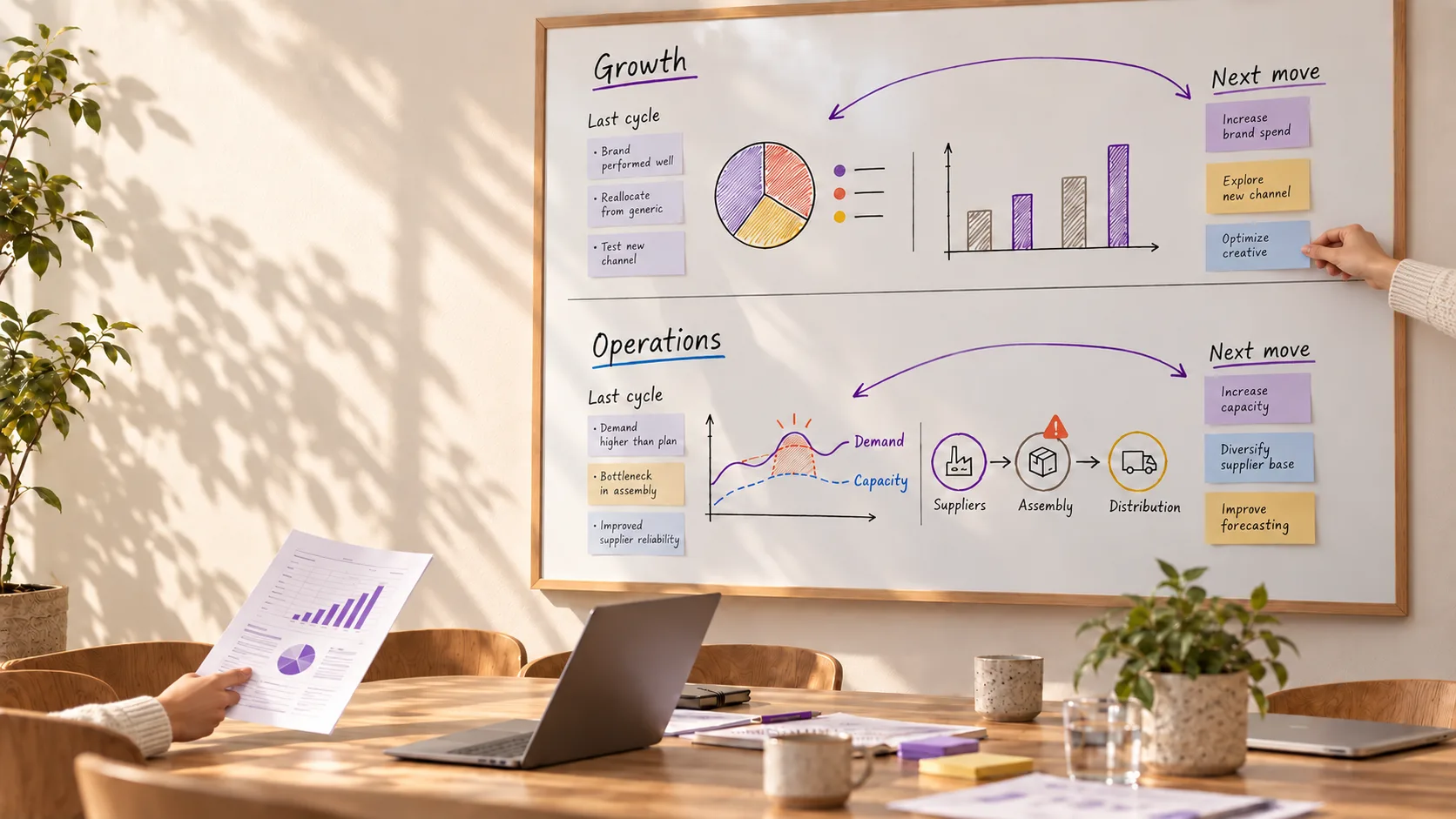
Growth AI
Decide how to split your budget across channels based on how each one actually performed and revise the plan each cycle.
Set prices by product, region and channel, and assess the likely effect on volume and margin before you change them. Plan for different market scenarios and optimize based on business constraints.
Find out which promotions performed well and plan the next promotions calendar on that basis.
Choose which product, offer or message each customer sees, based on what they have bought and responded to. The choices improve as more customers respond.
Measure what a campaign really added, separate from sales that would have happened anyway. Use that to decide whether to run it again, change it or stop it.
Process AI
Decide how much to make, where to hold it and when to move it. The plan updates when demand or supply changes.
Forecast demand, sales and cash at your planning granularity, using your own drivers such as promotions, pricing and seasonality. The forecast updates as new data arrives.
Flag the transactions, claims or suppliers that need a closer look, and record why each one was flagged, so reviewers spend their time on the cases that matter.
Platform
Agents are built, operated and governed here: check what every one of them is doing, set what it may touch, keep the cost in view and feed back what to improve
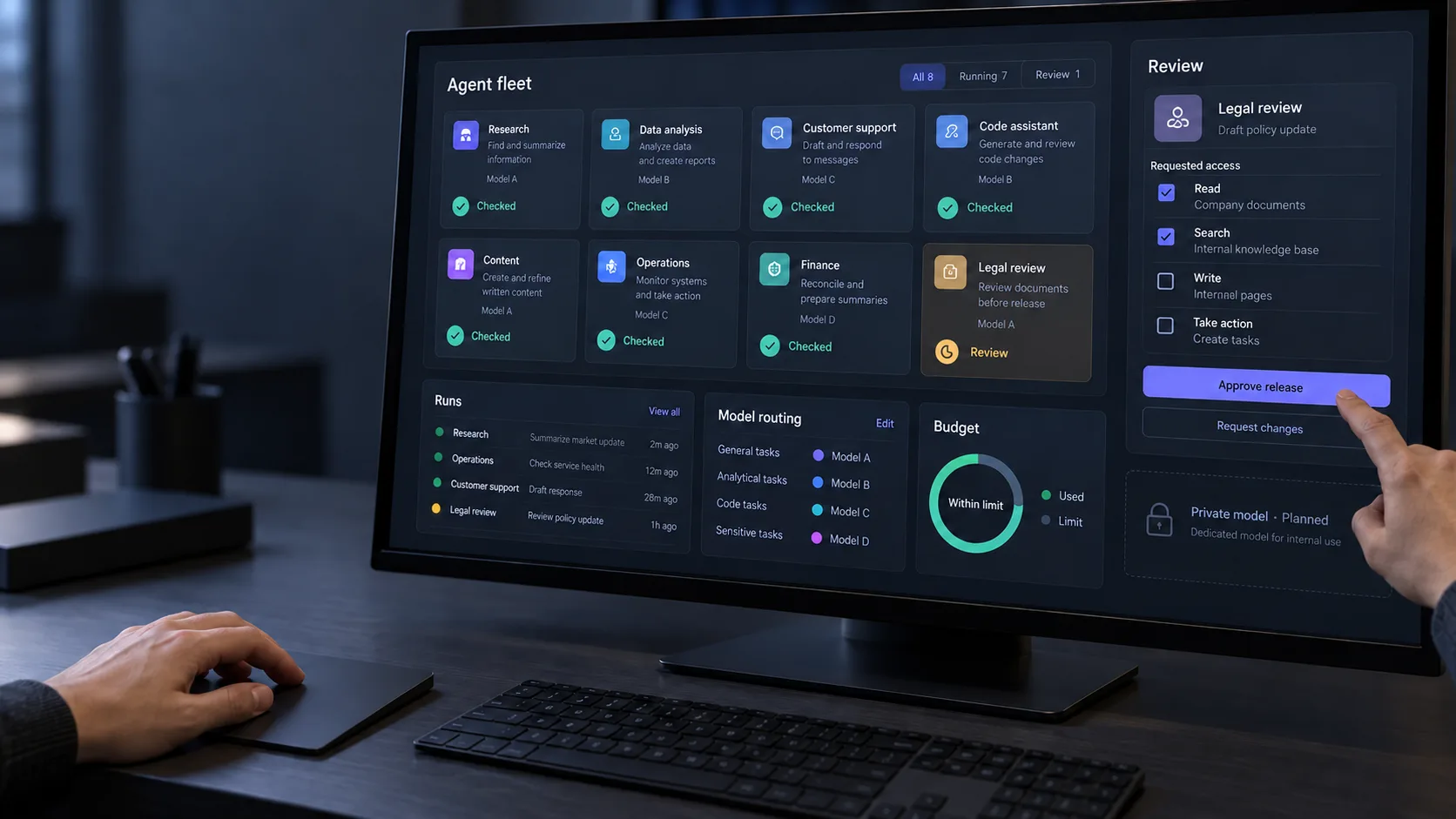
Platform AI
Define the actions every agent is not allowed to take and the tests it must pass before go-live. Each new version is checked against the same tests before release.
Decide which models, data, tools and skills each agent can use, and the agent’s role and responsibilities. All access is managed in one place for all agents.
View every run, model call and tool an agent used with detailed inputs and outputs. When something goes wrong, you can trace it back to the exact step.
Each task goes to the best-fit model that meets the quality bar on accuracy at the lowest cost.
See what each agent costs to run, by task, team and model. Set a budget and track spend; the agent stops before it exceeds the limit.
Sovereign AI
Train a model on your own data, inside your own environment. The model learns your context and your business, and the data stays with you.
Company
Enterprise data and AI, produced the AI-native way.
Traditionally, enterprise data and AI runs on scarce senior expertise, and quality varies with who is on the job. To change the paradigm, we are working on codifying that judgment and expertise, and building agentic systems that can act on it. Agents then build against a rulebook, and the experienced people spend their time defining the problem, reviewing the answer and improving the method.
Experience used to go into the output. Now it goes into the method.

How we work
A person defines the problem, the structure, and the standard the answer has to meet.
The definitions, rules and checks the work has to obey. The ones specific to you come from your environment, not from ours.
Agents do the heavy lifting, at a volume no team could match.
A second model checks the first one’s work against the spec it was given.
An expert confirms the results.
We watch how each role performed, and update what The System hands the agents next time.

Tell us what is hurting and we will tell you whether we are the right people for it.
hello@hamsalabs.aiCareers
We look for enterprising, high-ownership, hands-on individuals passionate about building the future of AI. Write to us. Tell us what you have built.